
Description
🌺 Floral Tisane🦋 Color-Changing☕ Caffeine-Free🌿 Loose Flower
The colour-changing cup — vivid blue flowers that turn magenta with a squeeze of lemon. The Sampson tea shelf’s only piece of edible chemistry.
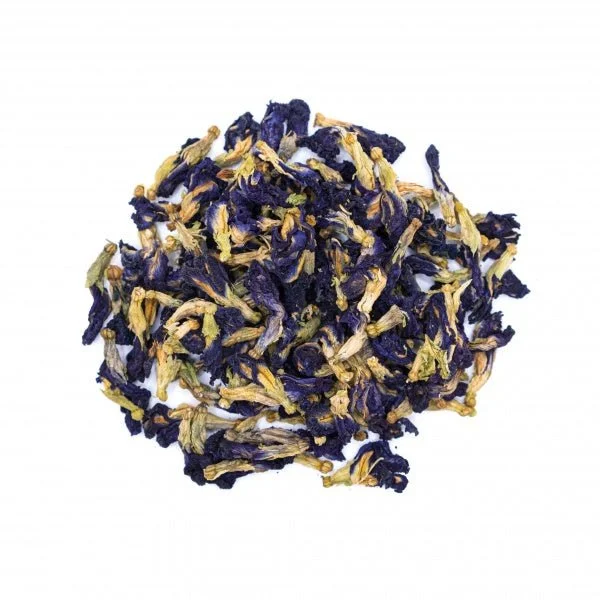
Butterfly Blue Pea (Clitoria ternatea) is a Southeast Asian flowering vine traditionally grown in Thailand, Vietnam and Malaysia. The dried buds are used as much for colour as for flavour — they’re the natural blue pigment in nam dok anchan, butterfly-pea lemonades, and rice dishes across the region. Steeped alone, the flowers release a deep cobalt-blue infusion.
The trick is the pH shift. Add lemon juice (or any acid) and the anthocyanin pigments rotate through the spectrum — first violet, then magenta, then almost pink. The visual is the primary attraction; the flavour is gentle, slightly earthy, faintly floral. This is a tea you serve to people who haven’t seen it before.
🦋
Real Pigment
Anthocyanin colour from the flower itself, no dye
🍋
pH-Reactive
Lemon shifts the cup from cobalt blue to magenta
☕
Zero Caffeine
A flower infusion, not a tea leaf
✨The Sampson Promise
We only put ingredients in our products that we would use on our own family. Every ingredient has a purpose. If it doesn’t need to be there, it isn’t.
Type
Floral Tisane
Caffeine
None
Origin
Thailand & SE Asia
Format
Loose Flower
Steep Time
5 min
Servings
~30 cups (50g)
Tasting Notes
💙
Cobalt First Pour
Aroma
The dry flowers smell faintly green and herbaceous; the brewed cup is what surprises — a deep, saturated blue that doesn’t look like food.
🍋
The Magenta Switch
Reaction
Squeeze a quarter-lemon into the warm cup. The infusion shifts through violet, settles at magenta. The change happens in seconds and reverses if the acid dilutes.
🌿
Earthy-Floral Finish
Body
The flavour is mild — closer to a wet hay or alfalfa note than to a perfumed flower. Sweetened or paired with citrus is where the cup actually drinks well.
How to Brew
01
Measure
One heaped teaspoon of dried flowers (about 2g) per 8oz cup. The flowers are light; they take more spoonfuls than you’d think.
02
Boiling Water
Bring water to a full boil. Pour over the flowers in a glass cup or teapot — you want to see the colour develop. The infusion turns blue within 30 seconds.
03
Steep 5 Minutes
Five minutes gives a saturated cobalt blue. Strain into a clean cup. To trigger the colour change, squeeze fresh lemon at the table — the show is part of the cup.
Water
100°C
Time
5 min
Per Cup
1 heaped tsp
Brew strong, let cool, then pour over ice with a slice of lemon balanced on the rim. The drinker stirs and the colour changes — that’s the cocktail-style serve.
About the Tea
🦋
Butterfly Pea Flower
The Pigment
Whole dried buds and petals of Clitoria ternatea, a flowering vine native to Southeast Asia. The blue colour is anthocyanin — the same pigment family that gives blueberries and red cabbage their hue.
🍋
Lemon (Optional Partner)
The Trigger
Not in the bag, but central to the cup. Half a lemon’s juice rotates the anthocyanin pigments and changes the colour. Lime works the same way; orange does not (not acidic enough).
💧
Glass Vessel
The Stage
Worth using a clear glass cup or teapot. The colour is the point — opaque ceramic hides what makes this tea what it is.
In the tin
Dried butterfly blue pea flowers (Clitoria ternatea).
Origin & Sourcing
Butterfly Blue Pea is harvested from cultivated vines across Thailand and neighbouring Southeast Asian countries, where the flower has been used as a natural food colorant for centuries before the West discovered it. Dried whole-flower grade for the Sampson shelf.
Reviews
There are no reviews yet.